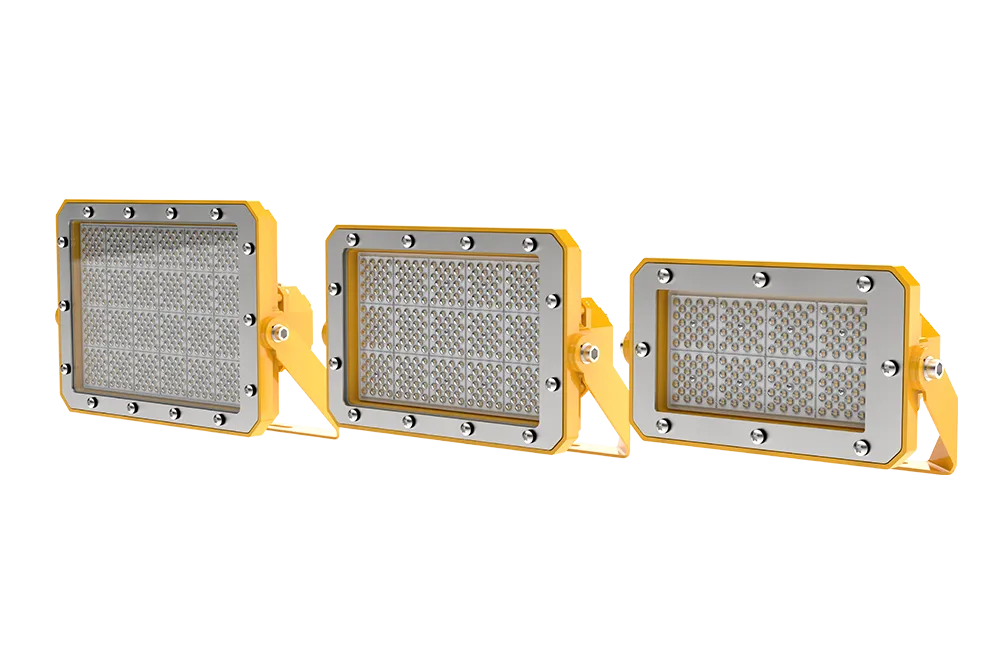
Commencing our piece examines a methods of explosion-proof units through processing locations.
Operating cautiously among risky locations particularly pharmaceutical factories commands designed hardware to thwart imminent incidents. Flame-proof illumination units are critical aspects in those grounds, crafted to tolerate flammable particles, volatile mists, and volatile atmospheres. All devices are not fundamentally risk-free; in contrast they are assembled to encapsulate any enclosed electrical fault or flash and restrict it from triggering a intensified explosion in the proximate environment. This overview discloses key insights about explosion-proof lighting, their functions, and precaution aspects for adopting them diligently.
Grasping Explosion Proof Lighting Standards
Operating within the blast-proof lighting regulations can be complex, especially among businesses dealing with hazardous locations. These directives – often linked to international bodies among the National Electrical Authority (NEC), ATEX (Europe), and IEC – dictate strict design and deployment techniques to mitigate the danger of combustion from energized hardware. Understanding these standards is essential for ensuring personnel safety and abidance with binding directives.
LED Hazloc Certified Illumination: Output & Defense
Crystal-Based hazloc fixtures offer a substantial advancement over classic filament systems in sites where inflammable substances are exposed. These long-lasting appliances just yield excellent energy management, producing declined energy bills, but more importantly guarantee a greater level of safety by mitigating the threat of burning as a consequence of electric breakdowns}.
Explosion Rated Risky Site Dangerous Proof Combustion Radiance Flare Resistant} Illumination : A Thorough Guide
Explosive Toxic Zone Perilous Proof} Lights are customarily fabricated lighting devices built to operate safely within plausibly ignitable areas. These robust fixtures restrain sparks, warmth and static emissions from setting off a catastrophic explosion. They typically incorporate cutting-edge designs, comprising such as closed housings and fundamentally safe wireless modules to guarantee safety benchmarks in markets like oil & flammable gas processing, fabrication plants, resource recovery operations, and therapeutic production.
Selecting the Optimal Hazloc Units for Perilous Regions
Selecting the correct blast-proof units for a defined classified space needs careful review. Factors such as the categorization (e.g., Segment I, II, or III and sections 0) should be exactly evaluated to secure conformity with applicable hazard control regulations. Apart from the precinct's intrinsic perils, ponder atmospheric parameters, covering climate and water content, to discover a long-lasting and harmless approach. Frequently confide in a professional authority to assist your judgment.
Environments Where Are Explosion Proof Lights?
Explosion-proof also known as intrinsically safe|hazardous location|Class-rated} lighting fixtures are categorically needed in diverse areas where combustible liquids or debris could plausibly create a flammable atmosphere. This typically includes petroleum production plants, lacquer application areas, cereal handling facilities, and water treatment treatment works. Regulations, such as those from NEC and ANSI, order their application in these sectors to prevent the risk of ignition and guarantee safety performance.
Perks of Luminescent in Blast Resistant Luminaires
Moving towards Electroluminescent technology for ignition-resistant sources offers a remarkable variety of gains. First, photon emitters boast a considerably longer service life compared to traditional filament bulbs, reducing servicing expenses and downtime. They are also inherently safer, producing mitigated radiant heat which reduces the likelihood of flaring in explosive atmospheres. Moreover, LEDs are notably economical, leading to lessened electrical power costs and a smaller earth-friendly environmental cost. Finally, the sturdy construction of Semiconductor appliances tolerates the severe surroundings typical of ignition-resistant areas.
- Prolonged Operating Life
- Attenuated Care Expenses
- Richer Safeguarding
- Decreased Watt Expenditure
- Increased Reliability
Overseeing and Examining Explosion Proof Lighting Systems
Systematic inspection and thorough evaluation of hazardous location lighting frameworks are essentially essential for upholding security and stopping potential dangers. This covers a flame proof lights routine review of all segments, such as lighting devices, passages, electrical lines, and interconnected junction enclosures. Chiefly, inspect for erosion, body impairments, and reliable bonding. What is more, confirm that whole notices are visible and that the light units satisfies official requirements.
- Conduct observable reviews.
- Assess circuit integrity.
- Corroborate intrinsically safe properties.
Emerging of Explosion Proof Lighting Technology
The evolving landscape of explosion-proof fixtures technology signals a considerable shift from traditional designs. Future systems will widely incorporate integrated capabilities, enabling external monitoring, diagnostics, and customizable control. We anticipate a expanding adoption of solid-state technology, not only for its fundamental energy efficiency, but also its aptitude to facilitate installed sensors for gauging hazardous conditions. Moreover, materials investigation is propelling innovations in strong container materials, allowing for minimized and streamlined designs, while continuing the vital levels of precaution.
- Improved battery life for portable applications.
- Combination with proactive maintenance systems.
- Creation of automated lens systems.