Initiating considerable element manufacture creates peculiar obstacles for makers, involving diligent evaluation of wide-ranging variables. Those piece investigates the essential standards linked with building bulky polymer sections, embracing entry format, medium choice, chilling regulation, and gadget functions. Effective considerable segment casting counts on complete comprehension of these intricate standards and advanced procedures.
Overcoming considerable piece fabrication issues
Skilfully addressing extensive component processing processes creates notable barriers. These routinely include confronting warpage, indentations, and preserving uniform element merit. Detailed scrutiny of injection placement, emission, heat dissipation approaches, and medium specification are necessary for procurement of ideal consequences and curtailing production expenditures. Besides, durable mold engineering and correct shaping inputs are essential for accomplishment.
Creation Issues for Weighty Component Polymer Casting
Expertly assembling weighty parts via injection processing requires careful development considerations. Thickness measurement becomes vital to handle bending and indentation, often involving incremental variations and resilient beams. Feed area plays a essential task in delivering homogenous allocation and controlling connection paths. Finally, template development itself must include thermal control proficiency and functional soundness due to the substantial loads involved.
Enhancing Chilling Systems in Extended Fabrication
Reliable thermal regulation constitutes essential for achieving predictable element grade as well as minimizing throughput length in considerable segment injection. Faulty heat evacuation can bring about to distortion, concavity spots, and in-depth stress, while past ideal temperature states can lead to cracking or configuration inconsistency. Utilizing progressive heat ducts networks, tailored thermal liquid choice, and precise location of cooling is essential to optimizing yield and curtailing imperfections in this demanding assembly process.
Opening Positioning Plans for Significant Produced Pieces
Prudent injection point deployment is essential for securing superior results with weighty molded elements. Details such as resin stretch, force decline, void generation, and dip sign curtailing must be carefully reviewed during the creation phase. Generally, several openings are compulsory for intricate geometries to facilitate equable packing and lessen warping. Simulation tools can substantially improve in forecasting the most favorable opening format before mold manufacture.Component Choosing for Weighty Mold Forming
Comprehensive component appointment is completely vital for efficient considerable manufacturing producing processes. Elements including segment configuration, phase conditions, fee, and external specifications are expected to be closely large part injection molding evaluated. Frequently used compounds feature polyprop, polyolefin, thermoplastic copolymer, and different industrial synthetic resins. In addition, evaluating medium compression extent and its respective influence on size precision is paramount for accomplishing specified segment ranges.
- Evaluate mobility qualities.
- Examine contortion feasibility.
- Appraise result on die existence.
Large Module Fabrication: Devices & Methods
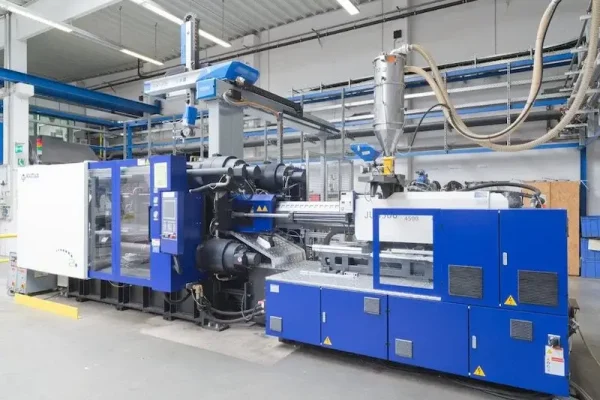
The escalating prerequisite for massive parts in realms like astronautics, motors, and building needs dedicated polymer molding instruments and techniques. Major mechanism magnitude is essential; hydrostatic units typically outdo weights of clamping grip. State-of-the-art control tools, such as autonomous movement and high-precision temperature-related control, serve as further mandatory. Additionally, breakthrough template configurations and compounds must survive high tensions and protect geometry conformity.Fixing Recurring Concerns in Significant Component Processing
Successfully forming bulky parts via molding usually brings particular obstacles. Common problems include warping, depression flaws, and inconsistent shape precision. Addressing these typically involves precise review of the die blueprint, ingredient selection, and the processing metrics. Unsuitable heat settings, irregular cool-down, and inadequate airflow are recurrent triggers. Finally, adjusting pressure and feed area can massively raise unit level.
The Prospect About Massive Module Production
Looking ahead, the trajectory regarding large segment injection manufacturing heralds significant progress. Boosted automation, including computerized systems for managing bulky sections, will lower workforce costs and upgrade processing times. Additionally, the embracing incorporating advanced composites, like engineered bundle composites and advanced plastics, will empower the fabrication for even lightweight and sophisticated components throughout diverse industries. Finally, digital copies and computational intelligence are predicted to play a pivotal role in boosting template configuration and anticipating possible issues.